
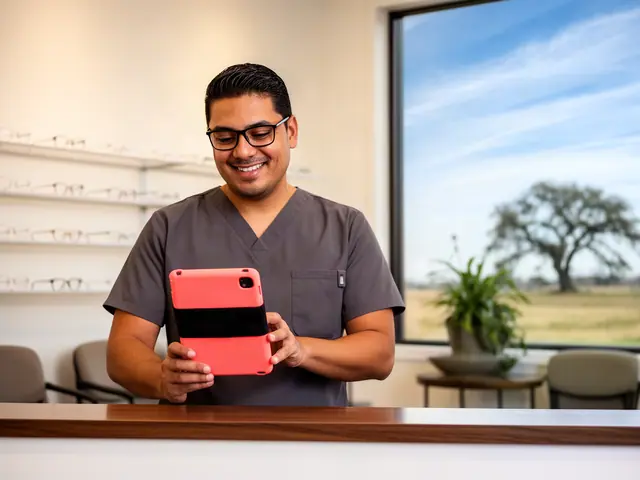
Pinewater Lending, a small-business funding broker in Victoria, Texas, helps Victoria County medical and dental practices finance clinical equipment, cover payroll while insurer payments clear, and fund fit-outs or buy-ins. The county had 223 ambulatory health care employer establishments in 2023 (Census CBP). Every credit decision and every rate and term belong to lending partners.
| Ambulatory health care employers | 223 in Victoria County (Census CBP 2023) |
|---|---|
| Offices of physicians | 89 employer establishments, 728 paid employees |
| Offices of dentists | 28 employer establishments, 225 paid employees |
| Health care and social assistance payroll | About $360.5 million, the county's largest (CBP 2023) |
| Common structures | Equipment financing first, then working capital, term loans and credit lines |
| Decision | Lending partner decides; Pinewater only introduces |
Health care in Victoria County, TX, by the numbers
Ambulatory health care services, the Census category for outpatient practices, had 223 employer establishments in Victoria County in 2023, with 2,596 paid employees and about $158.1 million in annual payroll. That group included 89 offices of physicians with 728 employees and 28 offices of dentists with 225 employees (U.S. Census Bureau, County Business Patterns 2023). The broader health care and social assistance sector, which also counts hospitals and social services, paid about $360.5 million, more than any other sector in the county.
The size profile differs by specialty. Nearly half of the ambulatory employers, 107 of 223, had fewer than five employees, and 48 of the 89 physician offices were that small. Dental offices ran larger: only 4 of the 28 had fewer than five employees. A further 374 ambulatory health care businesses in the county operated with no paid employees in 2024, including 71 physician offices and 3 dental offices (U.S. Census Bureau, Nonemployer Statistics 2024).
Clinical equipment
Equipment is the most frequent practice request. Operatory chairs and delivery units, digital imaging and X-ray, sterilization equipment, exam tables, diagnostic devices and practice-management software are expensive, specialized and essential. Equipment financing secured by the item is the usual route, through a loan, a lease or an equipment finance agreement.
Specialized equipment has a narrower resale market than, say, a pickup truck, and partners take that into account. Expect questions about the manufacturer, the model, whether the unit is new or refurbished, and who is selling it. Some vendors arrange their own financing; compare that offer's total cost with a partner's before choosing.
Payroll while claims are paid
A practice pays its hygienists, assistants and front-desk staff on a fixed schedule, but payment for the care they provide often comes later, after claims are submitted, processed and sometimes reworked. In a practice with eight or nine employees, which is roughly the average for dental and physician offices in the county, one slow month of collections can open a real gap.
Working capital suits a one-off gap with a known end. If collections lag every month, a line of credit is often the better tool, drawn when claims are slow and repaid when they clear. Partners will usually want recent bank statements and may ask for an accounts-receivable aging report.
Fit-outs, second locations and buy-ins
Opening a new office or adding operatories usually means a build-out: plumbing for dental chairs, electrical work for imaging, cabinetry and finishes. A term loan repaid over several years fits a project like that. Settle zoning and permit questions before the loan closes; the Victoria, TX zoning and building permit checklist is written with medical and retail tenants in mind.
Associates buying into a practice, or a partner buying another out, raise valuation and contract questions that go beyond funding. Partners often want the purchase agreement and the practice's financial statements before they will consider it.
New practices and established ones
An established practice can point to years of deposits, collections and tax returns, which is what partners read first. A new practice, or a clinician opening a first office, has none of that, so partners lean on the owner's personal credit, professional experience and the cash the owner is putting in. Equipment-secured financing is often the most practical starting point for a new office, because the chairs or imaging units back the deal. Larger unsecured amounts usually come later, once the practice has a record of its own.
Testing a payment before you ask
Before a conversation with anyone, it helps to know what a payment would look like. The practice loan calculator shows the monthly payment, total interest and total repaid for any amount, rate and term you enter. It does not know your collections or overhead, so compare its result with your own monthly figures by hand.
What partners usually review for a practice
- Recent business bank statements showing deposits and existing debt payments.
- The equipment quote or the build-out bid.
- How long the practice has operated and how it is organized.
- Business and personal credit history of the owners.
- For larger requests, tax returns and financial statements, and sometimes the lease.
Other practices and related businesses
Chiropractic, optometry, physical therapy and other outpatient practices finance the same categories: equipment, receivables gaps and space. Each partner decides which specialties it serves. For the wider county picture, see county numbers and local help; for other sectors, see the industry pages.
Veterinary clinics and pharmacies have their own equipment and inventory patterns; ask us whether a partner covers yours before preparing a full file.
By Pinewater Lending · Updated
Questions for the Red River Street broker?
Unsure which option fits? Call, or start online.